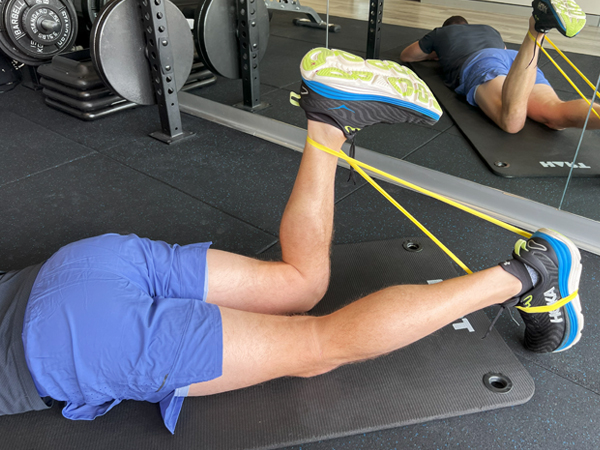
 |
HAMSTRING TEAR AND TENDINOPATHY REHAB | WEEKS 03-04 |
Stage Pre-requisites |

|
1. Completion of the initial 2 weeks of rehabilitation You should have completed the first stage of the program and be tolerating the exercises without significant flare-up of symptoms. 2. Walking tolerance has improved You should be able to comfortably walk moderate distances with minimal limping and without a significant increase in pain afterward. 3. Pain levels are settling appropriately Pain during exercises and daily activities should generally remain below 3–4/10 and should not significantly worsen the following day. 4. Able to tolerate early hamstring loading You should be able to complete the early activation and isometric exercises from Weeks 1–2 with good control and without sharp pain. 5. No increase in bruising, swelling, or acute symptoms If you experience worsening swelling, bruising, sharp pain, or sudden loss of strength, seek professional assessment before progressing. 6. Surgical patients must have clearance for strengthening progression If you have undergone hamstring surgery, ensure you have clearance from your Surgeon or Physiotherapist before commencing eccentric strengthening work. |
|
Physio Check-In |

|
By this stage of the program, it is an excellent time to check in with your Physiotherapist to ensure your recovery is progressing appropriately and that your exercise technique is correct.
|
|
Goals |

|
|
|
Recommended Equipment |

|
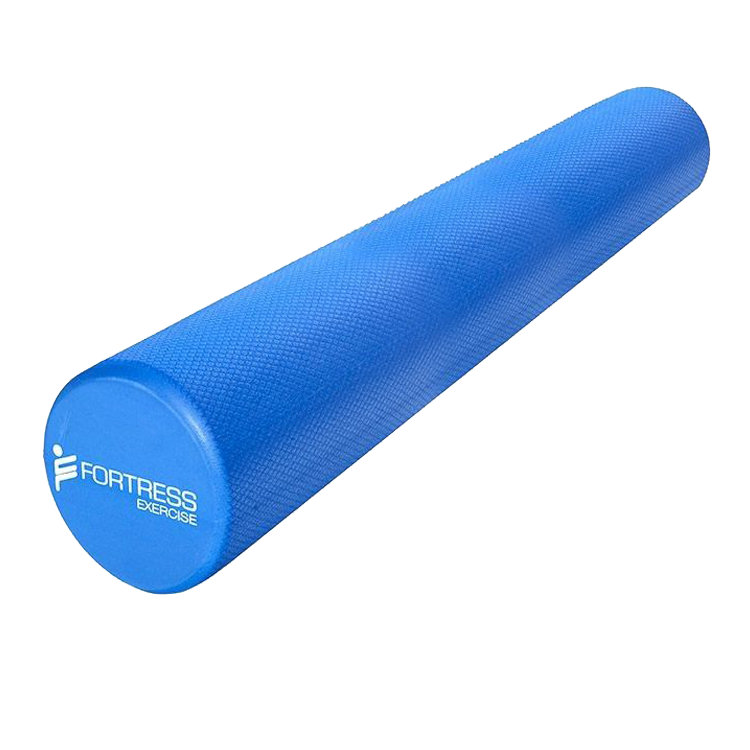
|
Foam Roller - Long (90cm)
|

|

|
Loop Band - Yellow (Light)
|
|
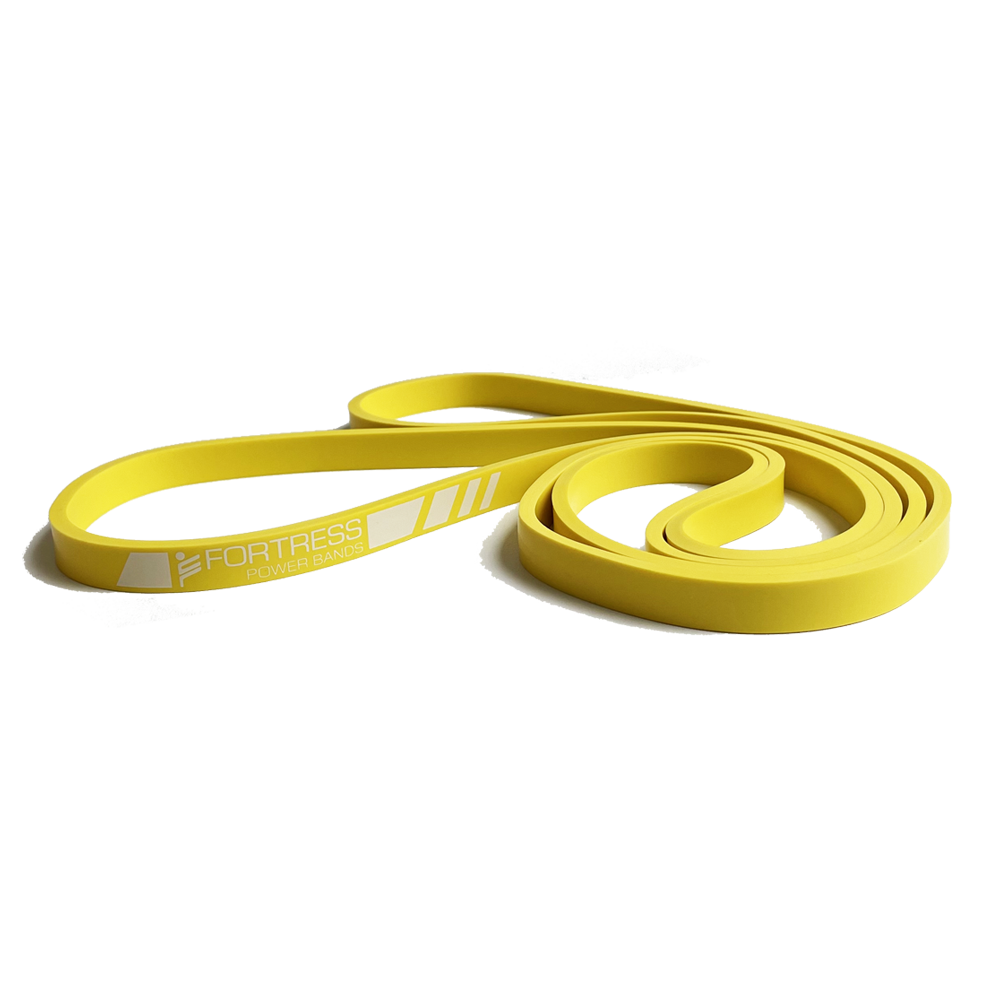
|
Power Band - Yellow (Light)
|
|

|
Theratubing - Red (Medium)
|
|
WEEKS 3-4: Hamstring Eccentrics and Early Strengthening |

|
WEEKLY INSTRUCTIONS
Overview: Weeks 3 and 4 begin the Eccentric Loading Phase of the rehabilitation program. This phase continues across the next 4 weeks and gradually introduces greater loading through the hamstring muscle and tendon structures. During this stage, you will begin controlled eccentric strengthening exercises, which focus on the lengthening phase of muscle contraction. Eccentric loading is extremely important for rebuilding hamstring strength, improving tendon capacity, and preparing for higher-level activities later in the program. As with the previous stage, the exercises shown represent one full week of rehabilitation, meaning you will repeat the same structure for both Week 3 and Week 4. ⚠️ Tendon Loading Guidelines Mobility and Movement Preparation Your mobility program now increases slightly in both exercise variety and movement range. You may begin moving slightly further into range, however all stretching should remain controlled and comfortable. It remains important to avoid aggressive stretching during this stage, as excessive tension through healing tendon and muscle fibres may delay recovery or aggravate symptoms. Stretching should feel mild to moderate only and should never reproduce sharp pain or aggressive pulling at the tendon attachment. The mobility work also focuses on surrounding structures including the hips, pelvis, glutes and thigh musculature, as stiffness in these regions can contribute to ongoing hamstring overload. Session 2: Hamstring Eccentrics and Glute Strengthening This session introduces early eccentric loading for the hamstring muscle belly and distal tendon structures, while continuing glute strengthening and pelvic control work. The eccentric phase refers to the lengthening component of muscle contraction. During these exercises, load should be controlled carefully, with emphasis placed on the lowering phase of movement. At this stage, we are still avoiding heavy loaded movement through deep hip flexion, as the proximal hamstring tendon is not yet ready for higher dynamic loading. Hip extension-based glute exercises provide a safer way to begin lightly loading the upper hamstring region. Exercises alternate between hamstring and glute-focused movements to help manage fatigue and improve movement quality. Make sure you watch the instruction videos carefully to ensure correct technique and loading. Session 3: Compound Strength and Single Leg Control This session progresses the movement patterns introduced during the first 2 weeks, with greater focus on: At this stage, movements remain primarily bodyweight-based to improve control and tolerance before introducing heavier external loads later in the program. The hip hinge exercise introduced in this phase is an important movement pattern that prepares you for future deadlift and gym-based strengthening exercises later in the rehabilitation program. Take your time learning the movement and focus on maintaining a neutral spine and controlled hip movement throughout the exercise. |
|
SPECIAL NOTES
|
|
Session 1: Mobility and Movement Preparation |

|
PER DAY
1
PER WEEK
3
1 |
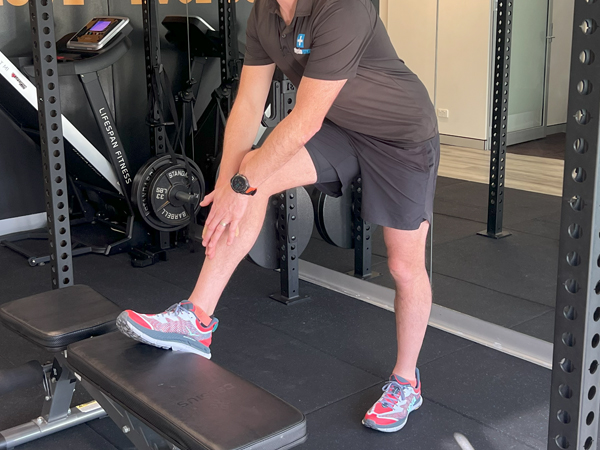
|
KS | Hamstrings (Bench)
1min x 3 sets each side
|
|
2 |
|
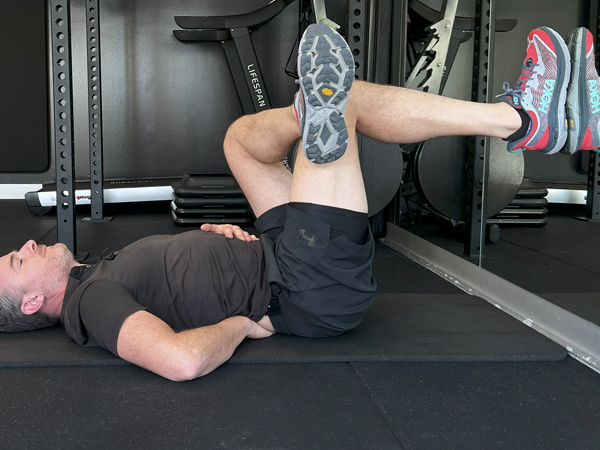
HS | Glutes (Wall)
1min x 3 sets each side
|
|
3 |
|
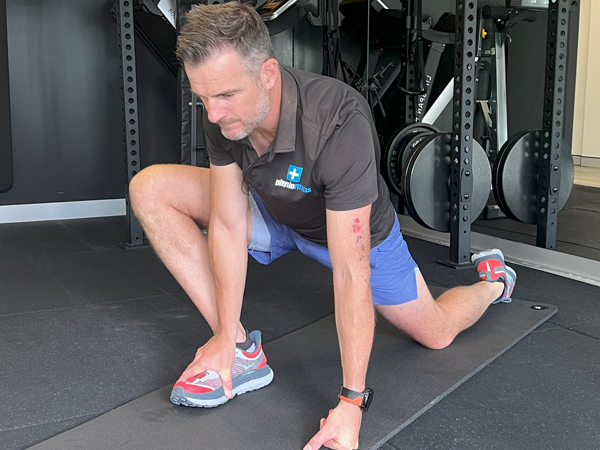
HS | Hip Flexion ER
1min x 3 sets each side
|
|
4 |
|
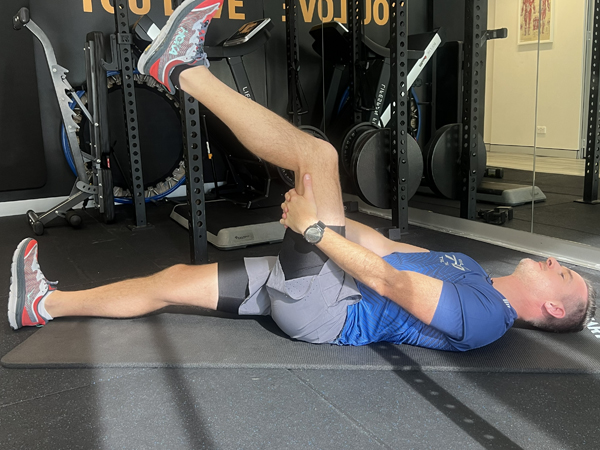
LS | Sciatic Nerve Floss (Lying)
3 sets x 20-30 reps each side
|
|
5 |
|
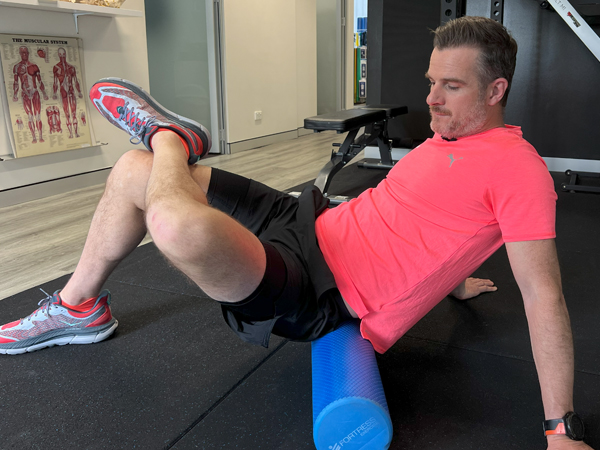
HS | Glutes - Foam Roller
3-4 mins each side
|
|
6 |
|
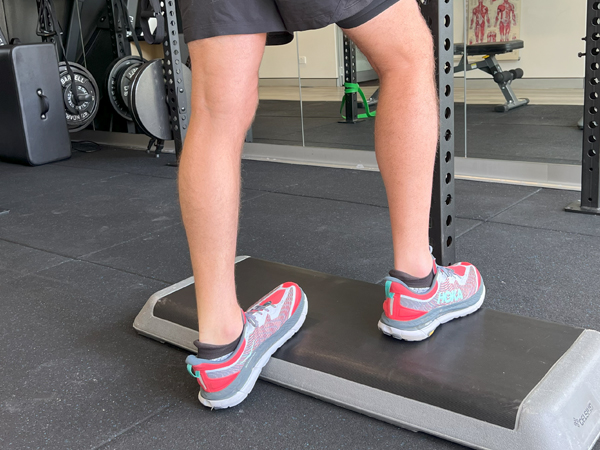
AS | Gastrocs (Step)
1min x 3 sets each side
|
|
Session 2: Hamstring Eccentrics and Glute Strengthening |
|
PER DAY
1
PER WEEK
3
1 |
|
K1 | Hamstring Curls (Isometric) - Band
4-6 sets x 10->30sec
|
|
2 |
|
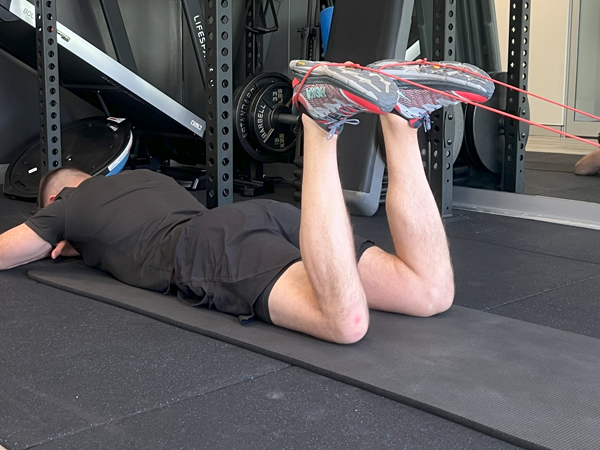
K1 | Hamstring Curls (Prone) - Band
3 sets x 8-10 reps
|
|
3 |
|
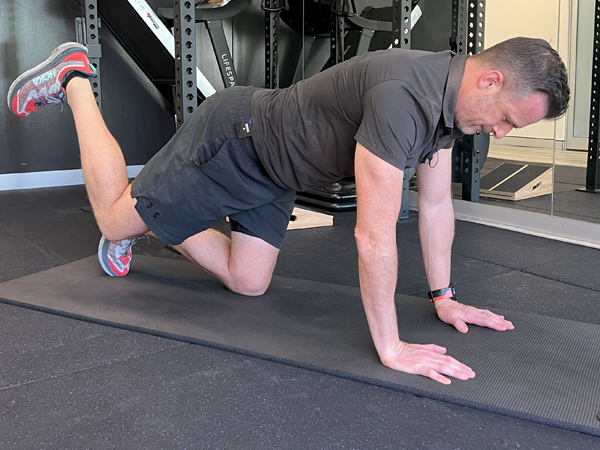
H3 | Hip Extension (Bent Knee)
3 sets x 10 reps both sides
|
|
4 |
|
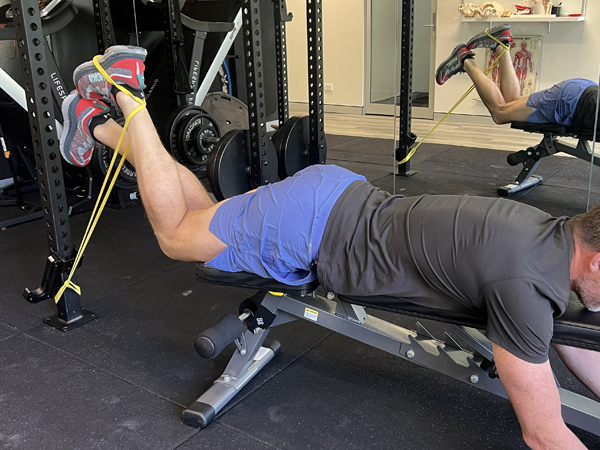
K2 | Hamstring Curls (Eccentric) - Band
6 sets x 6 reps each side
|
|
5 |
|
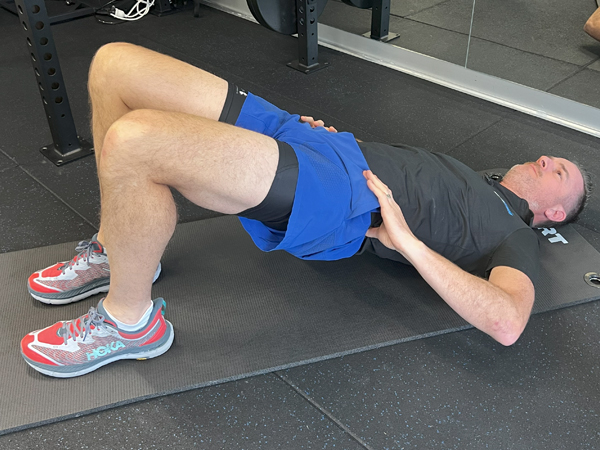
H2 | Glute Bridge
3 sets x 8-10 reps
|
|
Session 3: Compound Strength and Single Leg Control |
|
PER DAY
1
PER WEEK
3
1 |
|
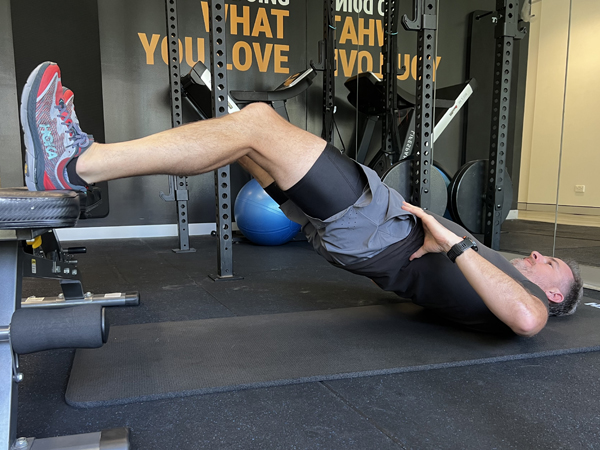
K2 | Double Leg Elevated Bridge
3 sets x 10 reps
|
|
2 |
|
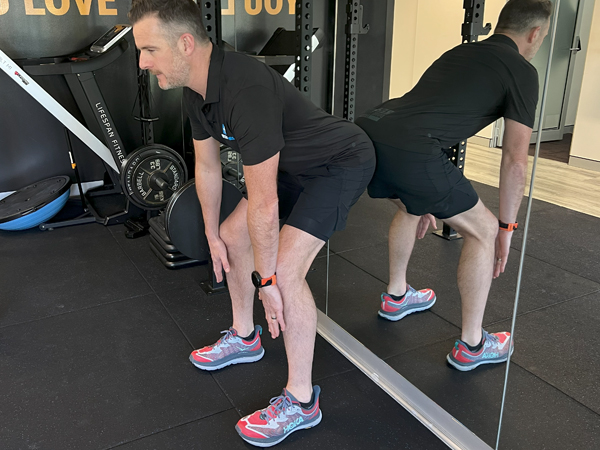
L1 | Hip Hinge
3 sets x 10-12 reps
|
|
3 |
|
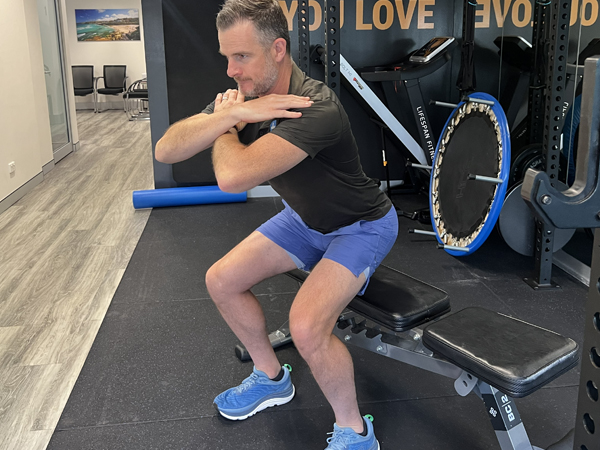
K1 | Bench Squats
3 sets x 10-12 reps
|
|
4 |
|
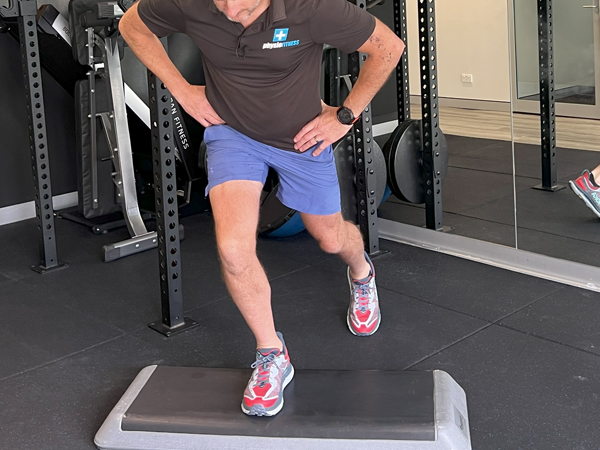
K2 | Step Down
3 sets x 10-12 reps each side
|
|
5 |
|
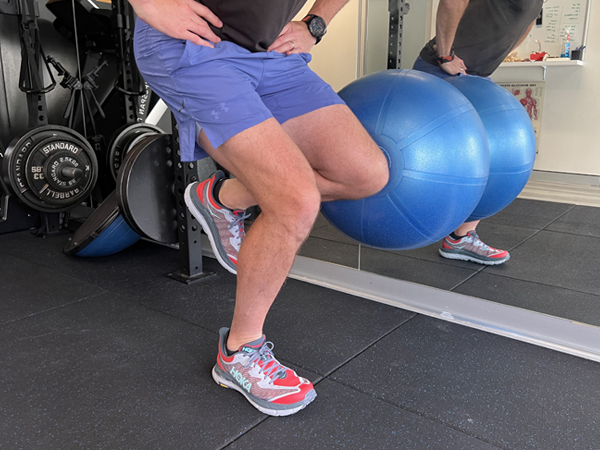
K3 | One Leg Ball Squat
3 sets x 10 reps sets each side
|
|
6 |
|
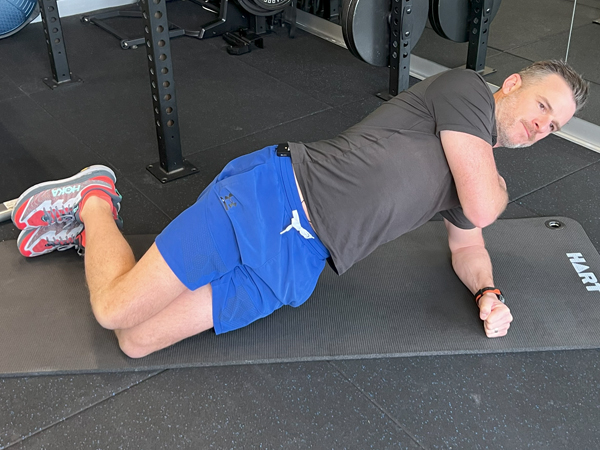
L2 | Side Plank (Knees)
30->45 sec x 3 sets each side
|
|
7 |
|
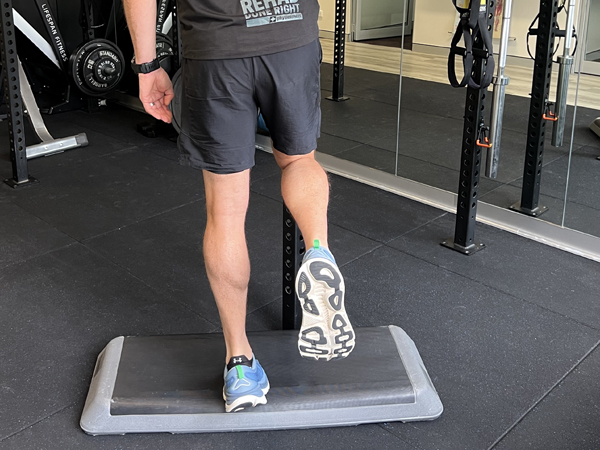
A3 | Calf Raises (Eccentric) - Step
6 sets x 6 reps each side
|
|